LRO narrow-angle camera products georeference hardware and surface disturbance at the published coordinates for Taurus-Littrow. Featured-site pages and catalogue links below point to the same releases cited on the Evidence page. All six Apollo sites from orbit lists every crewed zone with LROC featured links in one table.
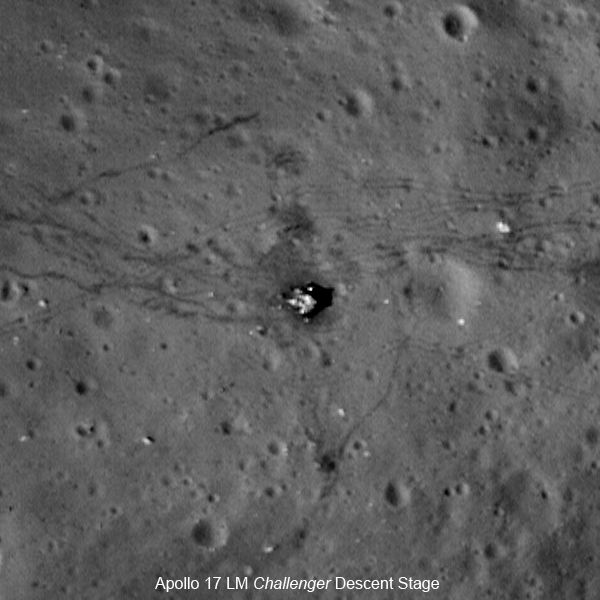
LROC coverage of the valley floor where Challenger touched down.
NAC products resolve the descent stage, LRV parking locations, and traverse disturbance in the valley.
Professional field geology documentation
Schmitt’s traverse decisions and sampling rationale are preserved in transcripts, maps, and photography.
Maximum documented sample return
Largest Apollo mass return is traceable through SRC logs and JSC inventory systems.
Selected frames
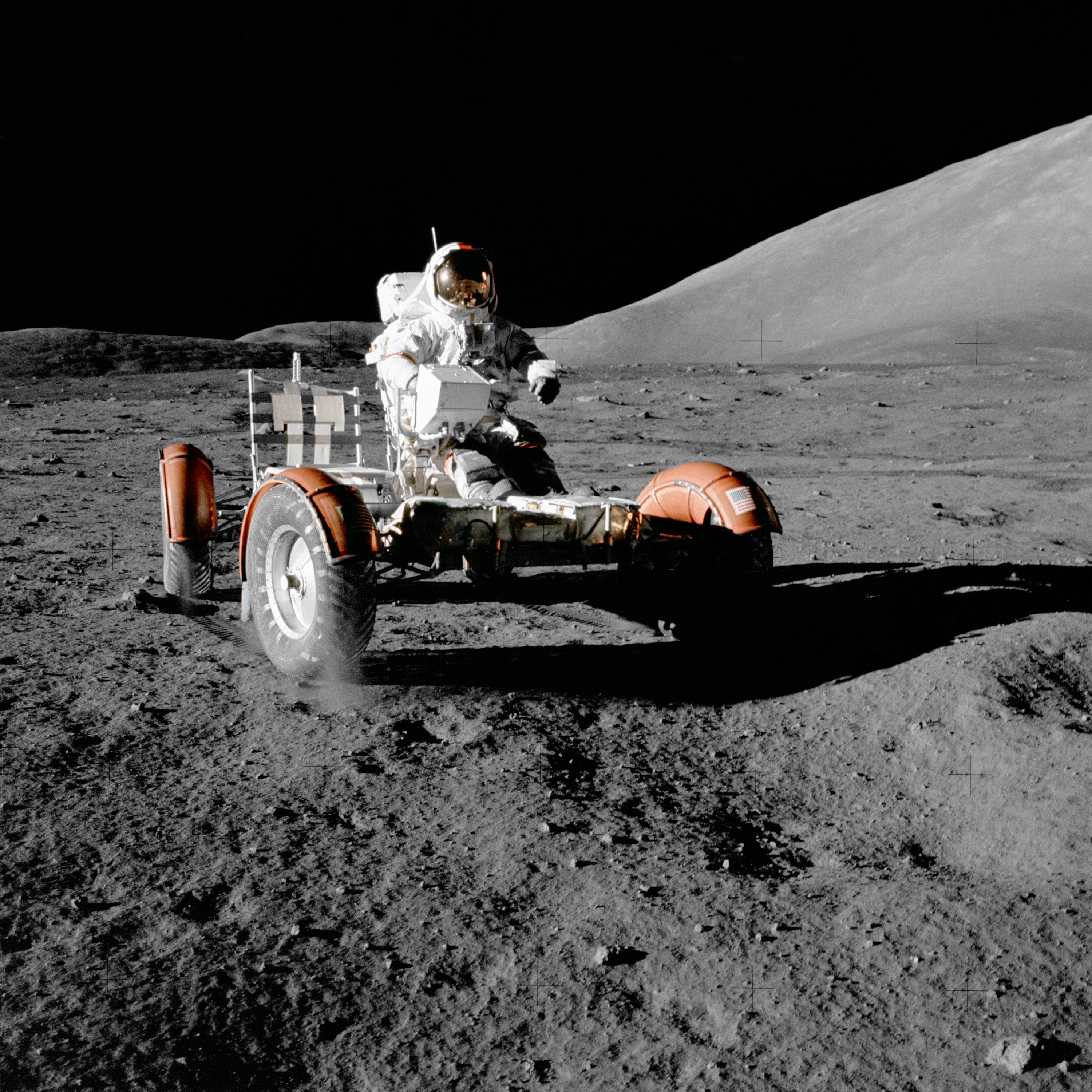
LRV operations in the surface archive.
NASA
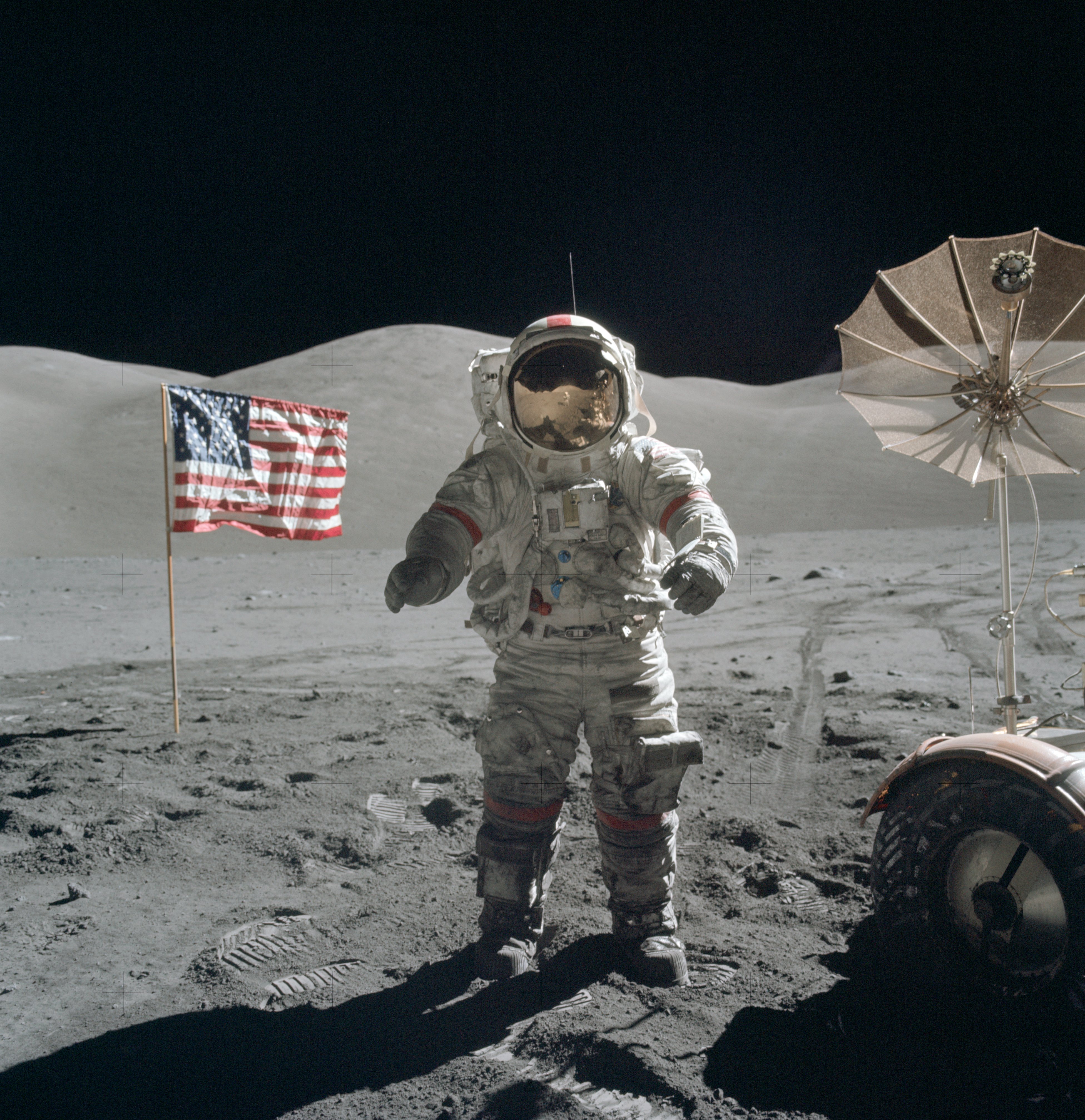
Commander at the last Apollo landing site.
NASA
Common questions about evidence for this landing
Factual shortcuts—full citations sit in the sections above and in mission source links.
What do LRO and LROC images show at Taurus-Littrow?
Published Lunar Reconnaissance Orbiter Camera (LROC) narrow-angle products resolve hardware, experiments, and regolith disturbance at the selenographic coordinates on this page. Use the orbital section above and the official LROC / NASA links under “Official sources” for the featured-site and data-product pages for Apollo 17.
Where can I read how this evidence fits the wider Apollo record?
The How we know page summarizes independent lines of proof. The Evidence catalogue groups LRO imagery, hardware, LLR, photo comparisons, and NASA documents with primary links.
Site imagery
Curated in explorer Site Detail
Apollo 17 — Taurus–Littrow. Use the explorer’s Site detail tab for the same rasters, or open the official product pages below.
Site map
Site map — regional NAC (LROC post 157, Taurus–Littrow)
Official LROC Apollo landing sites release (July 2009, post 157): ~1 km-scale narrow-angle frame of the Taurus–Littrow valley landing area.
The only mission with a professional geologist on the crew, Apollo 17 explored Taurus–Littrow with three long EVAs, deployed the final ALSEP, and returned the largest documented lunar sample mass of the program.
Key achievements
Final crewed lunar landing
Longest lunar surface stay
Largest lunar sample return
Surface hardware & experiments
Lunar Roving Vehicle
ALSEP
Traverse gravimeter
Timeline highlights
December 7, 1972
Night launch to Taurus–Littrow
Final Saturn V lunar mission begins with translunar injection toward the valley landing site.
December 11, 1972
Valley floor landing
Challenger lands between the massifs; crew prepares for three EVAs with LRV and traverse gravimeter work.
December 11–14, 1972
Three EVAs & final ALSEP
Geology stops document orange soil, boulder fields, and massif slopes; final Apollo surface experiments are left active.
December 19, 1972
Program closure & recovery
Last Apollo lunar crew returns to Earth; samples and data enter long-term curation and the open literature.
Official sources
Primary portals and data releases for verifying mission-specific claims. Cross-check themes on the Evidence catalogue and the wider How we know overview when you need category-level context.